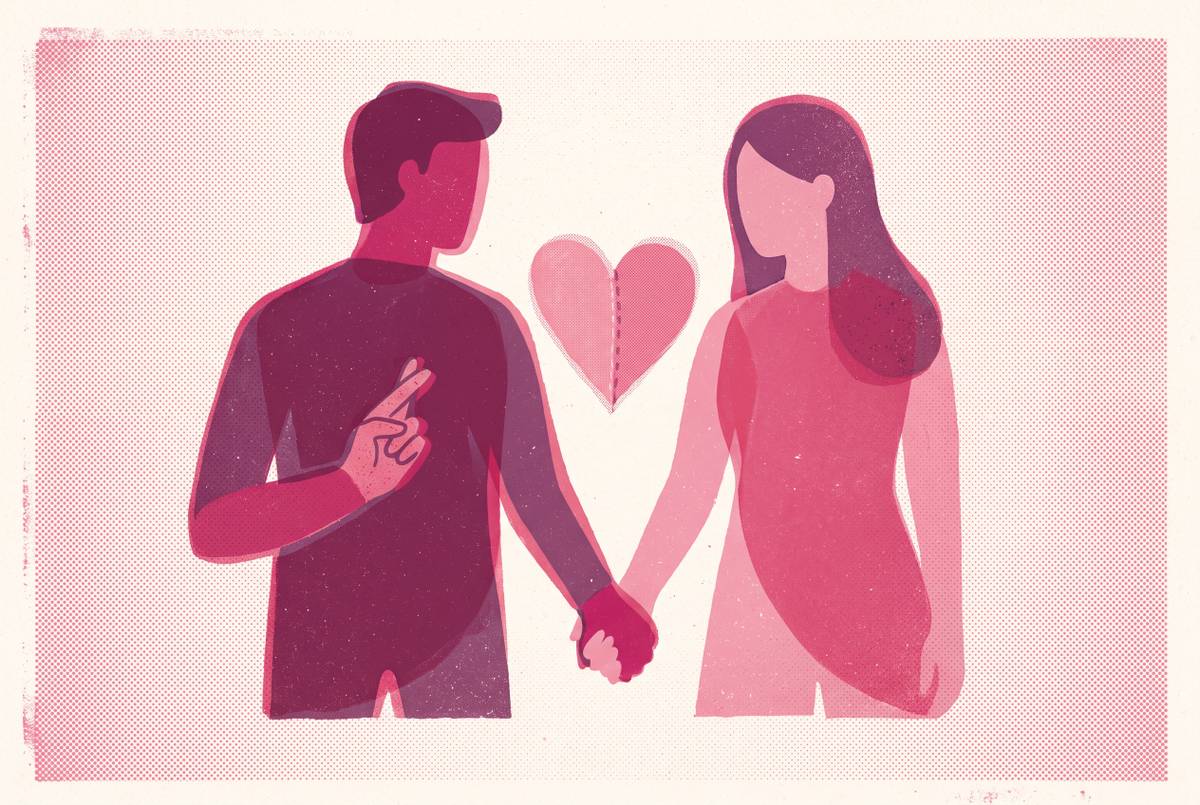
How the Black Moment Functions in Romance Structure
The emotional climax that separates earned happy endings from drifted-into ones.
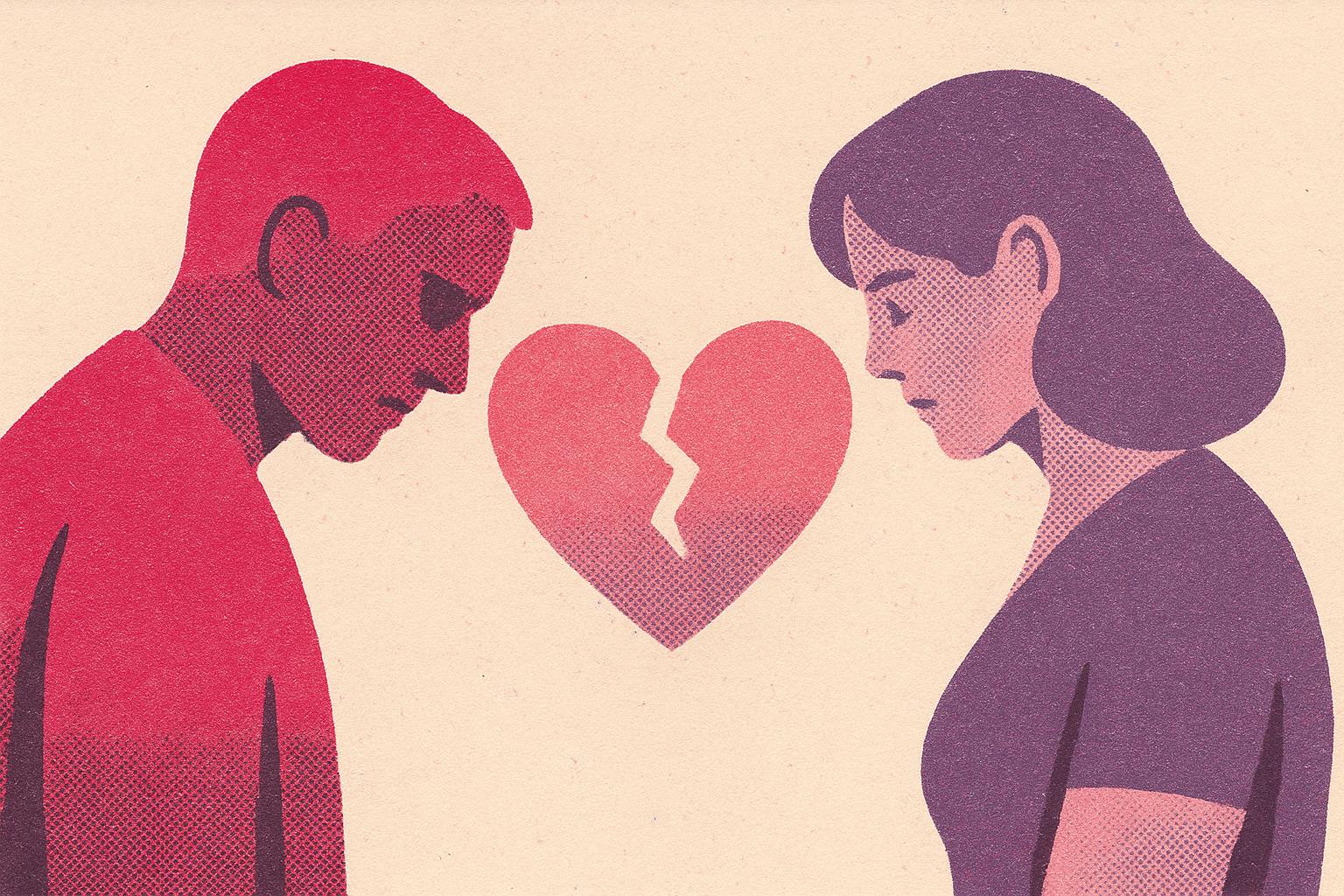
The black moment is the single beat in a romance novel where hope, not happiness, has to die completely. It is not a plot obstacle to survive between the falling-in-love section and the wedding scene; it is the emotional climax of the entire arc, and without it, the happy ending reads as something the couple drifted into rather than something they fought for and earned. Understanding what this beat has to destroy, what it has to reveal, and how it sets up everything after gives writers something more useful than a checklist: a working account of why this section of the book carries the weight it does.
What the romance arc is doing before the black moment arrives
Every romance arc is tracking one long movement: two people going from being unknowable to each other to being fully known and fully chosen anyway. The movement from being unknowable to each other to being fully known and fully chosen anyway is the spine. Every beat before the black moment exists to advance this movement, even when it looks like it's doing something else on the surface.
The meet cute is the scene that quietly establishes what each character is protecting. It's the scene that quietly establishes what each character is protecting, the wound underneath the personality, the mask they've built, and the belief about love and safety that mask serves. The escalating connection that follows puts those protections to the test against real attraction, and the midpoint shift (the beat where intimacy deepens in some structurally significant way) raises the stakes by making visible, for the first time, what would actually be lost if this fell apart.
By the time the black moment arrives, both characters have something real on the line, and readers have been carefully positioned to feel the size of that loss right alongside them. The black moment doesn't invent a new problem to accomplish this. It exposes what was already sitting there since page one: the internal conflict that has been quietly present the whole time finally reaches a crisis it can't be avoided or managed around anymore.
Where the black moment lands in the story
Most craft guides put the black moment somewhere in the story's last quarter, roughly the three-quarter mark, though frameworks disagree slightly on exact placement. The guide's design for novels versus screenplays often drives that disagreement.
What it affects and how: an action sequence needing only half a line of screenplay direction expands to pages in prose, and act three in a novel needs room to breathe: room for the fallout, room for the grovel, room to actually earn the... An action sequence that takes half a line of screenplay direction takes pages in prose. Act three in a novel needs room to breathe: room for the fallout, room for the grovel, room to actually earn the happy ending rather than announce it. Writers who borrow screenwriting placement wholesale often end up cramming this section, and a rushed third act is one of the more common structural failures in romance manuscripts.
The black moment itself spans several scenes. It's a beat with two distinct parts: the triggering event that destroys hope, and the sequel that follows it, the depression, the retreat, the decision to give up. A devastating event without that aftermath isn't a black moment, it's just a plot twist. Craft guides on romance structure consistently describe this exact combination: a triggering collapse followed by a genuine surrender, leaving the relationship with no visible path back.
The black moment must destroy hope, not just happiness
The thing that has to die in this beat is not comfort, and it's not proximity. It's hope. A reader working through the black moment shouldn't be able to see a plausible way back to the couple being together, and neither should the characters. They need to be further from the goal than at any earlier point in the book, full stop.
There's a kind of symbolic death happening to the character here. Whatever hope has been carrying them through the story's earlier obstacles gets stripped away, and the stakes that used to feel sufficient no longer are.
Most romances need destruction on two fronts to make this land. Plot-focused destruction closes the literal path, making whatever the characters needed to do to reach their happy ending impossible: the plan falls apart, the option is gone. Character-focused destruction works on the person, not the plan: any growth the character has made over the course of the book suddenly looks like a mistake. A character who spent three hundred pages learning to trust again gets slammed back into feeling betrayed and untrusting, and worse, the specific shape of that betrayal echoes the original wound rather than introducing a new one.
And crucially, the characters give up. Not as a tactic, not as a temporary retreat to regroup. They stop fighting for real.
The black moment must reveal the wound both characters have been hiding from
The black moment works because it's the fear coming true. That's only possible if the character's wounds, fears, and flaws were planted early enough that readers recognize the shape of the disaster when it lands, and feel the despair alongside the character rather than watching it from a distance.
This is where the character arc hits its climax. The protagonist sees the wound clearly for the first time, without whatever defenses have been softening the view up to this point. And that revelation has to come from inside. It's not new information delivered by another character or a plot twist; it's internal recognition the protagonist can no longer dodge.
A test separates a strong black moment from a weak one: does the crisis force the protagonist to confront something that has to change inside her, or does it present a problem a single conversation could clear up? If explaining herself to her love interest would dissolve the whole crisis, the conflict was never deep enough to carry this beat. Genuine conflict survives full disclosure. Both characters can know what the problem is and still be unable to solve it without becoming different people.
Why internal conflict must drive the black moment
External conflict, physical danger, social constraint, a supernatural threat, a period setting's rigid rules, is legitimate material for a black moment, and it can be genuinely powerful. But it only works when it's pressuring the internal conflict, not standing in for it.
The diagnostic test is simple: overcoming the obstacle either requires the character to change internally, or it requires just some external action. If she can solve the problem without updating a belief or dropping part of the mask she's been wearing since the meet cute, the external conflict isn't doing romance work, it's just doing plot work. The two threads, external resolution and internal transformation, need to be happening at the same time and feeding each other, not running on separate tracks that happen to meet at the finish line.
This plays out differently across subgenres. Contemporary romance tends to run the most compressed version, where the black moment is often just personal vulnerability, the terror of being seen without armor on. Historical romance builds period-appropriate constraint into the internal wound itself: what a woman could or couldn't do in a given era becomes a structural pressure on her psychology, not just scenery. Paranormal romance frequently turns the supernatural element into a direct metaphor, a vampire's nature, a shifter's mate bond, a curse, fusing external and internal conflict into a single force. When that fusion holds, it produces enormous emotional resonance; when it doesn't, the metaphor and the emotion come apart and the reader feels the seam.
Romantasy has been doing this synchronization visibly and well. In one popular fantasy romance series. Maas's A Court of Thorns and Roses, the romance's black moment is closely bound up with the external Under the Mountain confrontation, the two pressures converging rather than playing out separately. In another popular fantasy romance novel, the protagonist's Threshing trial and the shifting terms of her relationship with the male lead are deliberately timed together, external crisis and internal crisis hitting at once rather than in sequence. Romantic suspense runs a related but distinct version: physical peril used specifically to accelerate vulnerability, not to replace the emotional work that has to happen anyway.
Quiet black moments and catastrophic ones: how scale affects function without changing requirement
The version of the black moment most readers picture first is the catastrophic one, an event like a breakup scene, a kidnapping, a betrayal revealed, something that makes physical or circumstantial reunion look genuinely doubtful.
But plenty of romances run quieter stakes, and the black moment scales down with them. Sometimes there's no dramatic separation and no catastrophe. Instead, one or both partners wrestle privately with the idea of coupledom itself, what it would mean to actually let someone in. That can be as compact as a few pages of one character arguing with herself about whether the relationship is worth the risk of real vulnerability.
What doesn't scale down is the uncertainty. Even in the quietest contemporary romance, the reader has to genuinely wonder if this relationship survives. The dramatic apparatus is variable. The uncertainty produces genuine angst that does not scale down along with the dramatic apparatus.
How the black moment makes the grovel and HEA structurally possible
The separation following the black moment is doing real structural work: it's proving what each character is willing to sacrifice and what they've actually absorbed from the crisis. That proof is what makes the reunion mean something instead of just happening.
The grovel that follows isn't about humiliating the character who caused the break, it's about evidence. Evidence that the character understands what she did and why it mattered. Evidence that she's willing to be vulnerable in a way she demonstrably wasn't before the black moment forced the issue. Done right, the grovel is the moment the internal arc becomes visible in actual behavior rather than internal monologue.
The failure mode here is familiar: a single speech, no concrete action behind it, instant forgiveness. A grovel that feels too easy signals a black moment that was too shallow to begin with, they're proportional to each other, always. A grovel that actually lands shows change through action, not through apology alone, and it has to demonstrate that the relationship can now survive something it couldn't survive before. That difference needs to be shown on the page.
A working checklist for writers building or diagnosing their black moment
Start with whether the hope is genuinely dead, or just under threat. If a reader, or worse, the characters themselves, can still picture a path forward, the beat hasn't done its job yet.
Check whether the crisis echoes the original wound. A black moment that works feels like the worst possible version of what the character feared from the very first chapter, not an unrelated disaster that happens to show up at the right structural moment.
Ask whether resolving the crisis actually requires internal change. If both characters could fix this by having one honest conversation, or by taking some external action that doesn't touch who they are, the conflict was external only, and the happy ending built on top of it won't feel earned.
And ask, honestly, whether the characters have given up. Not retreated tactically to regroup and come back stronger. Surrendered. The stakes that carried them through every earlier obstacle in the book need to stop being enough, at least for one beat.
Sources
- What Makes a Story's Black Moment a Black Moment?
- Fiction Writing: What is the ‘Black Moment?’
- Romance Novel 3-Act Plot Structure | Lyss Em Editing
- Romance Novel Structure: A Craft Guide for Writers
- romance101.substack.com
- The Romance Arc: Structure & Integration
- 20 Key Scenes for Writers of Romance Novels - C. S. Lakin
- Where does the "black moment" fall in a novel? - Writing